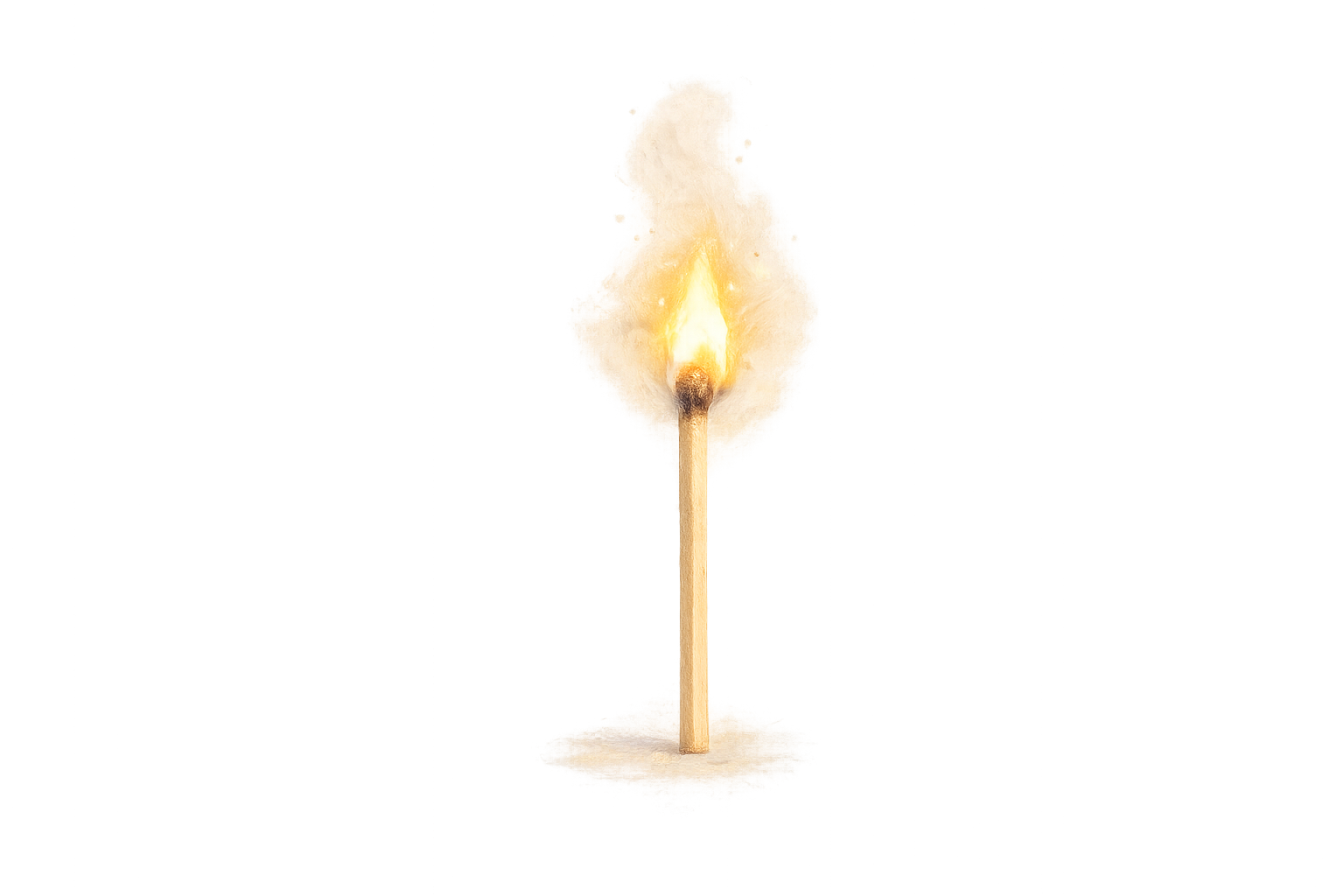
What makes a fire burn is space between the logs, a breathing space. Too much of a good thing, too many logs packed in too tight can douse the flames almost as surely as a pail of water would. — Judy Brown
Creating Space Between Parts in Session
There are several ways that we are trying to create space in session. The term 'un-blending' speaks to noticing parts and also asking parts to notice and separate from one another. This too is nourishing and often leads to feeling more clear and at ease.
Therapy is not only what happens in the session. It is also what happens in the space around it.
A fire needs wood. But it also needs air.
In Internal Family Systems, change happens not through force but through contact. When a part feels seen in the presence of Self, something reorganises. Emotional memory can update. Old patterns soften. The brain begins, quietly, to lay down new pathways. Too much effort — too many insights, too much processing, too much intensity — can crowd the flame.
Getting Space Outside of Session
Reorganisation continues after the session ends. The body keeps listening. The system keeps adjusting. Integration often happens quietly — while walking, while washing dishes, while sitting in prayer, while moving on a yoga mat, while writing in a journal without quite knowing what will come. These are not add-ons to therapy. They are spaces between the logs.
Gentle Suggestions to Support the Work, Outside the Work
Choose something meaningful to you and commit to this ritual as a means of supporting yourself at this time:
- Walking without headphones, letting parts speak.
- Nature — light, air, trees, water; the nervous system remembering its wider belonging.
- Time with animals — their steady presence often regulates without words.
- Being with trusted friends — connection as quiet integration.
- Laughter — allowing joy to interrupt intensity and remind the system of safety.
- Yoga or stretching that allows sensation and connection to surface safely; any form of exercise can be like a jellyfish shaking — a huge release of tension, grief and trapped energy.
- Journalling as a way of giving voice to different inner positions.
- Painting — giving image to experience when words feel insufficient.
- Crying — letting feelings move rather than holding it in place; guided meditations can support the system to hold this if needed.
- Tidying or clearing — putting energy into what wants to shift, creating outer order as inner energy reorganises.
- Shopping slowly and intentionally — finding objects that reflect something meaningful (this could be a part or a wish).
- Prayer or contemplation as an orientation toward something larger than the part that is afraid or a request for support.
- Rest — perhaps the most important of all. Allowing the nervous system to settle. Allowing new learning to consolidate. Allowing the fire to burn without being constantly tended.
These practices widen the internal field. They allow the work to breathe. Sometimes the most therapeutic thing you can do is relax and allow. Building a fire requires attention to the wood. And to the spaces in between. Therapy is similar. The depth matters. And so does the time between.
I Struggle to Find the Time
The short answer: it might not be easy at the start so allow for that. Small, consistent steps can lead to the biggest shifts and this is a very simple, free way that you can help yourself.
So building fires requires attention to the spaces in between, as much as to the wood. When we are able to build open spaces in the same way we have learned to pile on the logs, then we will have learned to tend the fire. — Judy Brown